Collectibles · How to spot the real thing
How to spot a real vintage sign in five minutes, right in the booth
Old gas, road and railroad signs get reproduced — a lot. Here's how to tell an old sign from a new one dressed up to look old — with a magnet, a loupe and five minutes.
The short answer
A real porcelain sign is powdered glass fired onto iron or steel one color at a time, so look for raised edges where the colors meet, chips that step down through layers to dark metal, and wear that fits a life outdoors. A magnet and the weight only rule out aluminum fakes (plenty of new imports are porcelain too), so judge the chips, the rust, the hardware, the fine print and whether the design ever existed at all.
How do you tell if a porcelain sign is real?
Start with how it was made. “Porcelain” on a sign means vitreous enamel: powdered glass melted onto metal in a kiln at roughly 750–850 °C (1,380–1,560 °F). Old signs started as heavy rolled iron or steel. The maker fired a base coat, then added each color on top, one firing at a time.
That process leaves fingerprints:
- Shelving. Each color overlaps the next a little, so the border between two colors stands up a hair. Collectors call it shelving.
- Layered chips. A real chip is a small crater. Look closely and you can see the layers stacked at its edge. At the bottom you hit metal, and on a sign that hung outside for decades, that metal has rusted dark brown to black.
- Wear that makes sense. Old signs chip at the edges and around the mounting holes, but they also pick up scratches and dings across the face from years of weather and hands.
No single clue proves a sign is old. When three or four agree, you’re getting somewhere.
How to tell if a sign is porcelain or tin
Porcelain is glass, so it’s glossy and hard, and it chips the way a dropped plate does. A tin sign is printed instead: lithographed ink on thin sheet metal, one color per pass through the press. Tin signs are often embossed, or printed with a fake frame and bent into a “self-framed” shape. Tin dents and scratches, but it never loses flakes of glass.
Both kinds get reproduced. So once you know what it is, the next question is: when was it made?
Are porcelain signs magnetic? Yes, but that’s only half the test
A magnet sticks to an old porcelain sign because the base is iron or steel. Randy Huetsch of The Antique Advertising Expert points out that signs from the 1950s and earlier didn’t use aluminum, so a magnet that slides right off is a quick no.
A magnet that sticks proves much less. Steel is steel, whether it was rolled in 1935 or last year, and companies in India and the Philippines now make new porcelain signs. On one collectors’ forum, an owner trusted his sign because it was heavy and porcelain, and it still turned out to be a fake. The magnet and the weight can rule a sign out. They can’t rule it in.
How fake vintage signs are made, and how they’re “aged”
There are three kinds of not-old signs out there:
- Honest reproductions are sold new, as decor. Nothing wrong with that. Kovels notes they’re sold labeled as new, then end up at garage sales and flea markets.
- Fakes are reproductions passed off as old.
- Fantasy signs copy a design that never existed. The classic example is a solid blue or solid green Coca-Cola sign. No original like that ever existed, and Kovels calls the black, red, green and blue porcelain Coke signs made in India easy-to-spot fakes.
The fake aging is usually what gives them away. Watch for:
- Chips knocked in evenly around the edges, while the middle of the sign stays clean.
- Bright orange-red, powdery rust where a real sign would have dark brown-black rust.
- A powdery film seeping onto the surface.
- Shiny new grommets or rivets on a face that’s supposed to be 80 years old.
The 5-minute in-booth check
What to bring
A small magnet, a 10x loupe and your phone (flashlight and camera). Don’t take a heavy sign down off a wall by yourself; ask at the cashier first.
- Magnet, 10 seconds. It slides off? The sign is aluminum and modern. It sticks? Keep going.
- Raking light, 1 minute. Hold your phone flashlight low and shine it across the face. Look for shelving where the colors meet. Flat, flush color is a warning.
- Chips, 1 minute. Look at two or three chips through the loupe. You want layers at the edge and dark metal at the bottom.
- Rust, 30 seconds. Dark brown or black is a good sign. Bright orange powder is not.
- Wear, 30 seconds. Is the wear spread over the whole sign, or is it a tidy ring of chips around the edge?
- Holes and hardware, 30 seconds. Grommets should have aged along with the face, unless the sign was never hung. Holes should sit where they do on known originals. A door push with no screw holes is a problem.
- Fine print, 20 seconds. Read the bottom edge. A modern company name or a web address settles it.
- Look it up, 1 minute. Search the brand plus “porcelain sign auction.” Auction catalogs list exact dimensions and show close-up photos, so you can compare the size, colors, logo and hole positions.
Red flags on a “vintage” sign
- Chips all the way around the edge and none on the face.
- Orange, powdery rust.
- Red lettering shinier than everything else. Red usually fades first.
- Crisp new grommets on a battered face.
- A crude or lopsided logo, computer-font lettering, or a trademark in the wrong spot.
- Colors the brand never used.
- No shelving: every color flat and flush.
- A size that doesn’t match documented originals.
- Even rail marks on the back. Modern production lines leave them, though some genuine signs made after 1950 have them too.
- A listing that leans on “vintage” and “authentic” and gives no details.
Check the date against the brand’s own history
Brands change their names, logos and programs, and those changes are on the record. Three examples:
- Phillips 66. The name goes back to 1927. The shield logo was introduced in 1930.
- Wells Fargo. Its U.S. express business ended in 1918, when it was folded into the new American Railway Express.
- AAA. The Approved Auto Repair program was established in 1975.
So if the age a seller claims for a sign doesn’t fit the brand’s own timeline, ask why.
Then look for a maker’s mark. Many genuine porcelain signs have a small maker’s stamp near the bottom edge, sometimes with a year. Morphy Auctions has described signs marked “Tenn. Enamel Mfg. Corp. 1933” and “Tennessee Enamel, 1931.” A mark is a clue, not a certificate, because some newer signs get a maker’s name added to look authentic.
What collectors mean by “8.5,” “DSP” and “touch-up”
- The 1–10 scale. A 10 is perfect and unused. A 9 is near mint. An 8 to 8.5 is excellent: minor scratches, rubs or small chips that don’t hurt the look. At 7 the chips are obvious, and at 5 the major flaws are numerous. Auction houses also add quarter points and plus signs, like 8.75+.
- DSP means double-sided porcelain. Each side gets its own grade.
- Touch-up means part of the sign was restored. A non-factory mounting hole was drilled later.
- Crazing is enamel that has lost its gloss. Crazing, scratches and old bullet holes are all common damage.
- The 1–100 scale. AGS, an independent grading service, scores each part of a sign, including centering, color, gloss, edges, the field and the mounting holes, and combines those scores into one grade.
More and more, a sign’s value rides on its condition alone.
Why provenance matters
Provenance is the record of who owned a piece and where it has been. A paper trail, like an old photo of the sign on the building or an earlier auction record, helps show a sign hasn’t been altered and isn’t a forgery. A good story is a start, not proof. If you’re spending serious money, get an independent opinion. Grading services such as AGS authenticate advertising, gas-and-oil pieces included.
Where to look for vintage signs at the mall
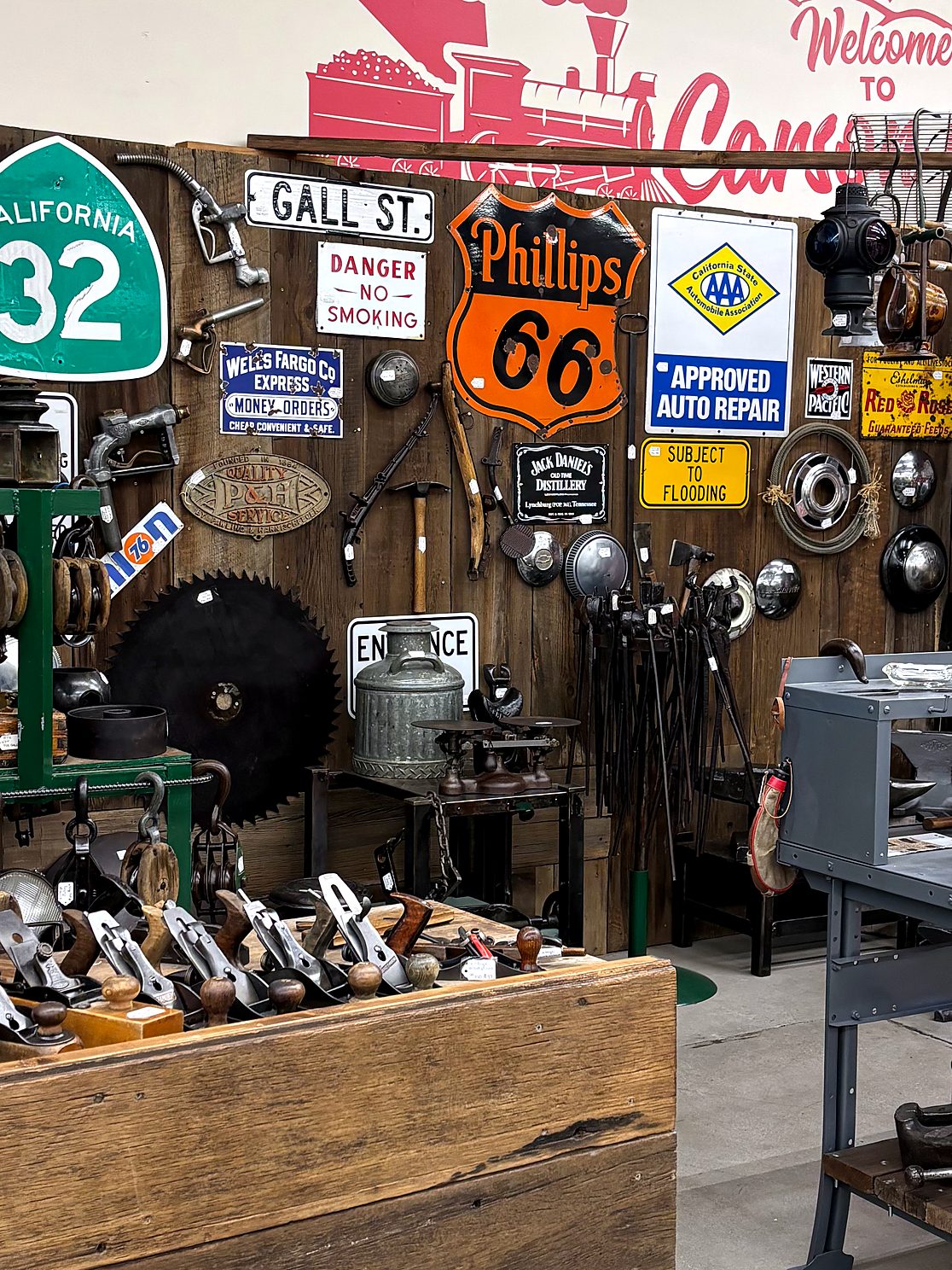
Start in the Collectibles booths, where the Americana runs wall to floor. On our last look, one booth wall had a Phillips 66 shield, a California 32 highway marker, a Wells Fargo & Co. Express sign and an AAA Approved Auto Repair sign, with a railroad lantern, a saw blade, hubcaps and old hand planes nearby. Nothing in this post is a verdict on any sign in the booths. Run the check yourself.
- Look up. Signs hang on walls, so check above eye level.
- Use the Treasure Map. It shows the main floor, booth by booth. There’s an upstairs too.
- Walk every aisle. A different vendor stocks each numbered booth, so a sign can turn up anywhere.
- Come back. Booths change as vendors sell and restock.
- Into railroad lanterns? The Nevada State Railroad Museum is about a 10-minute drive south. Plan the day.
We’re open every day, 10 to 6, at 1831 N Carson St, with a parking lot right in front. Questions before you come? Call (775) 461-3142.
More from the booths
-
Currency · How to collect
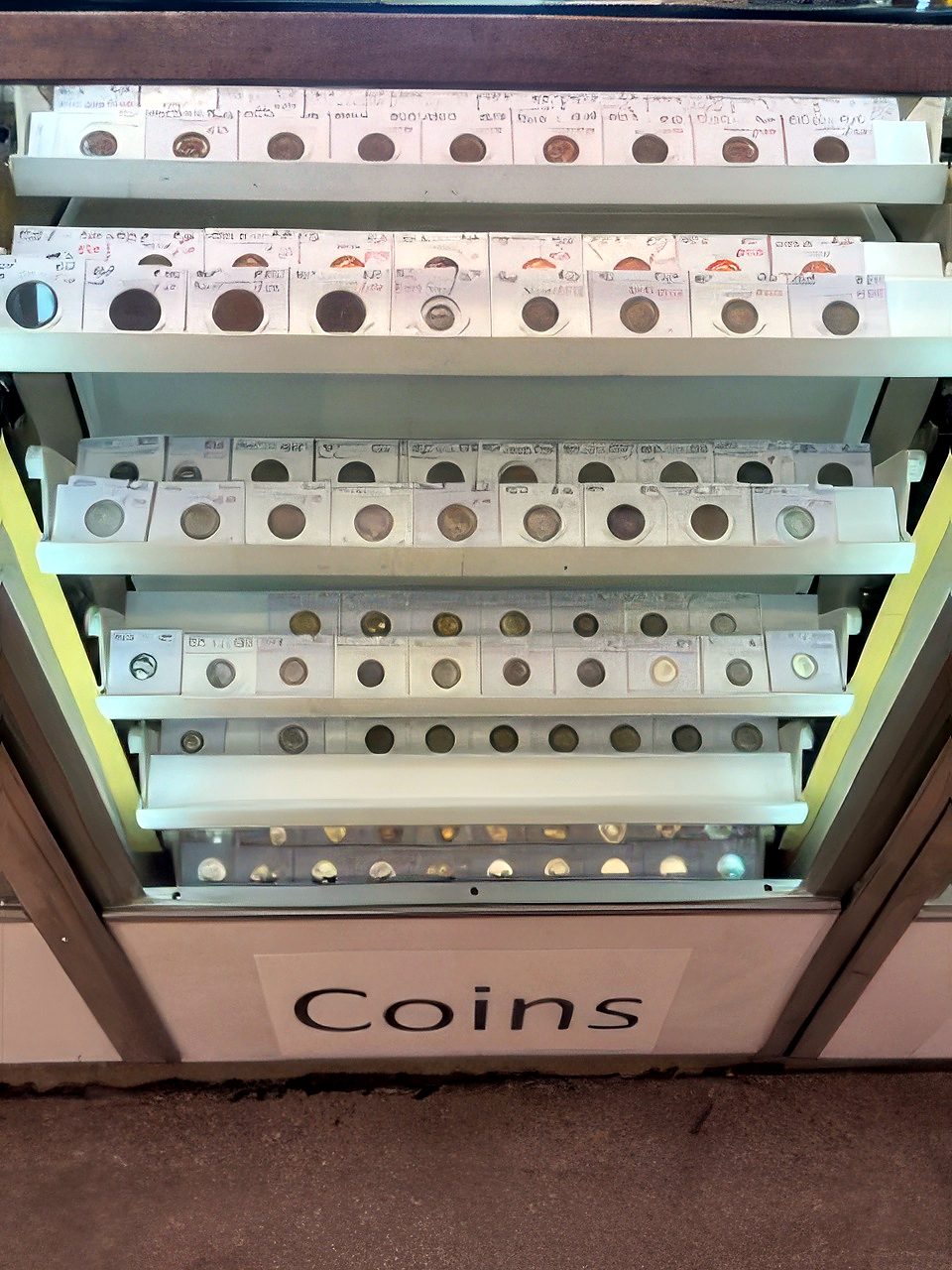
Start a coin collection
Silver dates, the 1–70 grading scale, and why you never clean a coin.
-
China · How to value
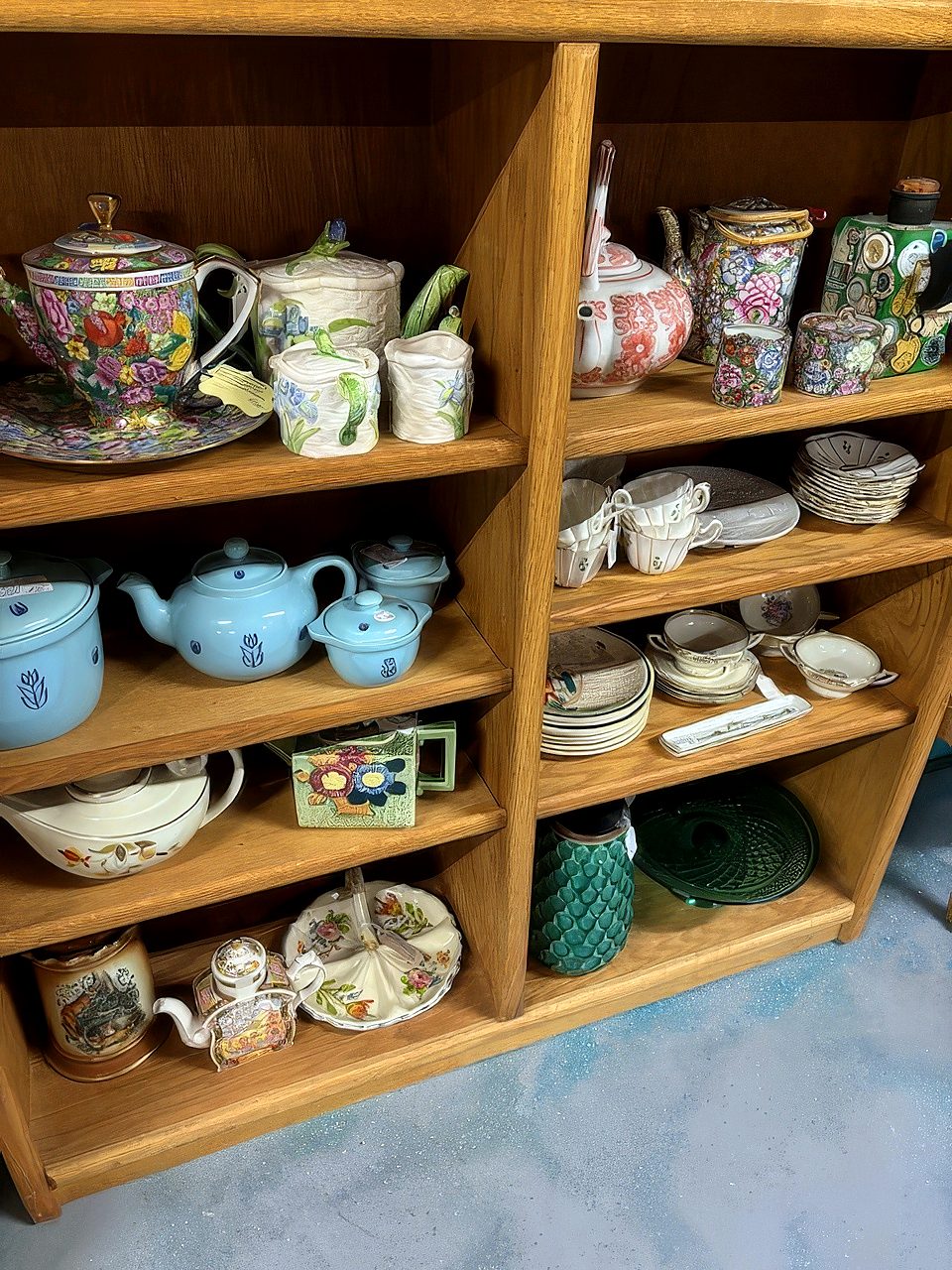
Is my china worth anything?
Read the backstamp, check the rim and find real sold prices before you guess.
Vintage signs: quick answers
- When did they stop making porcelain signs?
- Porcelain was the main kind of outdoor advertising sign from the 1880s into the 1950s. Production dropped off around World War II, because of the cost and because the war needed the metal.
- Are porcelain signs still made?
- Yes. A few specialty shops still make them, though not on a mass-market scale. New reproductions also come from overseas, India among other places, which is why old-looking doesn’t always mean old.
- Are porcelain signs magnetic?
- Old ones are, because the base is iron or steel. But a magnet can’t tell old steel from new, so it only rules out aluminum fakes.
- Is a reproduction sign the same as a fake?
- No. A reproduction sold as new decor is honest. It only becomes a fake when someone presents it as old.