Currency · How to collect
How to start a coin collection: a beginner's field guide
Every coin collection starts with one coin you can't stop looking at. Here's how to turn it into a real collection: what to hunt first, what never to do, and where to look on North Carson Street.
The short answer
To start a coin collection, begin with the coins already in your pocket, pick one thing to collect, and buy a guide like the Red Book before you buy coins. Hold coins by the edges, never clean them, keep them in PVC-free holders, and learn the 1–70 grading scale before you pay extra for condition.
How do you start a coin collection? Five first steps
The U.S. Mint puts it simply: you can start a coin collection with the coins you already have. Here's the plan we'd hand a friend.
- Empty your pockets. Sort your change by date and mint mark, the small letter that says where a coin was struck. It's a good year for it: the Mint struck its last circulating penny on November 12, 2025, and new 250th-anniversary quarters, a dime and a half dollar are turning up in change in 2026.
- Pick one lane. A focus keeps you from buying everything. The Mint's common themes include time period, denomination, mint mark and design. "Every Lincoln cent date I can find" counts. So does "silver."
- Buy the book before the coin. A Guide Book of United States Coins, better known as the Red Book, has come out from Whitman every year since the 1940s. It covers dates, mint marks and retail prices, so you know what you're holding before you pay for it.
- Gear up small. A magnifier, a soft pad to work over and PVC-free holders. That's the whole starter kit.
- Go look at real coins. Photos flatter. Seeing coins in person, holder by holder, trains your eye. Buy one coin you can explain (date, mint mark, metal, rough grade) and call it a good day.
What coins should a beginner collect first?
Starting a coin collection from zero? Pick coins that are cheap, findable and teach you something. Our first five:
- A wheat cent. Lincoln cents with two wheat stalks on the back were struck from 1909 to 1958. The lesson: dates and mint marks. Bonus hunt: 1943 cents were zinc-coated steel, because copper was needed for the war.
- A war nickel. Wartime nickels from 1942–1945 are 35% silver. The lesson: metal matters.
- A silver dime or quarter. The lesson: one year on the date changes what it's made of.
- A 1965–1970 Kennedy half dollar. These are 40% silver, the in-between years most people miss.
- A slabbed coin. One modest coin graded and sealed by PCGS or NGC. The lesson: what a professional grade looks like, so you can check your own eye against it.
And a someday coin: a "CC" from the Carson City Mint. More on that at the end.
What years are U.S. coins silver?
Any U.S. dime, quarter or half dollar dated 1900 through 1964 is 90% silver. (For 1800s coins, check the Red Book.) The Coinage Act of 1965 took the silver out of dimes and quarters and dropped the half dollar to 40%. Silver left the half for good in 1971.
- Dimes, quarters and half dollars, 1900–1964: 90% silver.
- Kennedy half dollars, 1965–1970: 40% silver.
- "War nickels," 1942–1945, with a big mint mark over Monticello: 35% silver.
- Morgan silver dollars, 1878–1904 and 1921: 90% silver.
How to spot a war nickel
Flip it over. A large P, D or S above the dome of Monticello means the wartime silver alloy. That P was the first time Philadelphia's mint mark ever appeared on a U.S. coin. Careful with 1942: nickels from earlier that year, including the 1942-D and the 1942 with no mint mark, are the regular copper-nickel mix. No big letter over the dome, no silver.
What's the silver worth? Melt value moves with the spot price of silver every day, so check a live price, not a number from a blog post. This one included.
Should you clean old coins?
No. Not with polish, and not even with a soft cloth. The U.S. Mint says there's no way to restore a coin's shine, and that older coins with deep age coloration are more desirable than ones stripped by cleaning. The Royal Canadian Mint warns that just wiping a coin with a soft cloth can damage its finish and drastically cut its value.
The grading services agree. PCGS and NGC give coins with cleaning damage a "Details" grade instead of a straight number, and NGC's labels can literally say IMPROPERLY CLEANED. PCGS notes that a coin like that is generally worth less than the price guides show.
That brown or rainbow toning you wanted to scrub off? PCGS says collectors consider colorful, natural toning desirable. Leave it.
How should you handle and store coins?
Hold a coin by its edges, between thumb and forefinger, over a soft towel. That's the U.S. Mint's advice, and PCGS warns that mishandling can ruin a coin. Don't talk over coins, either: both the U.S. and Canadian mints say tiny drops of saliva can leave spots.
Gloves are a real debate. The U.S. Mint suggests soft cotton gloves. The Royal Canadian Mint agrees, and says to skip latex or plastic gloves, whose powder or lubricants can damage coins. On the Collectors Universe forums, plenty of experienced collectors push back: some find cotton linty and prefer nitrile, and others just wash their hands. Everybody agrees on the edges.
Storage: skip soft PVC flips. The U.S. Mint says PVC eventually coats a coin with sticky green slime, and PCGS explains that heat and light break PVC down and release hydrochloric acid. Look for holders made of Mylar, polyethylene or polypropylene, or what NGC calls "hard" flips, which aren't treated with PVC. Acid-free cardboard 2x2s and albums work for everyday coins. Keep everything cool and dry, since sharp swings in temperature and moisture discolor coins.
How are coins graded? The 1–70 Sheldon scale
Coins are graded from 1 to 70, plus a word: "F-12," "MS-65." Dr. William Sheldon built the scale in the late 1940s to price early American large cents. His pricing math faded, but the numbers became the framework for modern U.S. grading. Wear is usually the biggest factor, the U.S. Mint says.
The grades you'll hear most (PCGS definitions, shortened):
- G-4, Good: heavily worn, rims mostly full. Yes, "Good" is near the bottom.
- F-12, Fine: about half the detail worn flat, all lettering visible.
- VF-20, Very Fine: moderate wear, some detail lost.
- XF-40, Extremely Fine: every design element shows, high points worn flat.
- AU-50, About Uncirculated: a trace of wear on the high points.
- MS-60 to MS-70, Mint State: never circulated, from covered with marks (60) to flawless (70).
To practice, PCGS Photograde Online lets you match a coin to photos of each grade.
Third-party grading: PCGS and NGC authenticate a coin, grade it and seal it in a hard plastic holder collectors call a slab. It's a paid service, so weigh current fees against what a coin is worth. Grading is still a judgment call, so the U.S. Mint says learn it yourself and check grades given by others.
Tools to bring coin hunting
- A loupe or good magnifier. The U.S. Mint lists one first among the basics.
- Your want list. The dates and mint marks you're after, on your phone.
- The Red Book, or photos of the pages you need.
- The silver cheat sheet. 1900–1964 dimes, quarters and halves are 90%; 1965–70 Kennedy halves are 40%; a big mint mark over Monticello is 35%.
- Your phone's camera zoom, for a second look at a date.
- A few PVC-free flips or 2x2s for the ride home.
A fair note
The U.S. Mint lists flea markets and antique shows among the places coins turn up, with a reminder to know your prices and watch for "problem coins." That's what the book and the loupe are for, anywhere you shop.
Where to look for coins at the mall
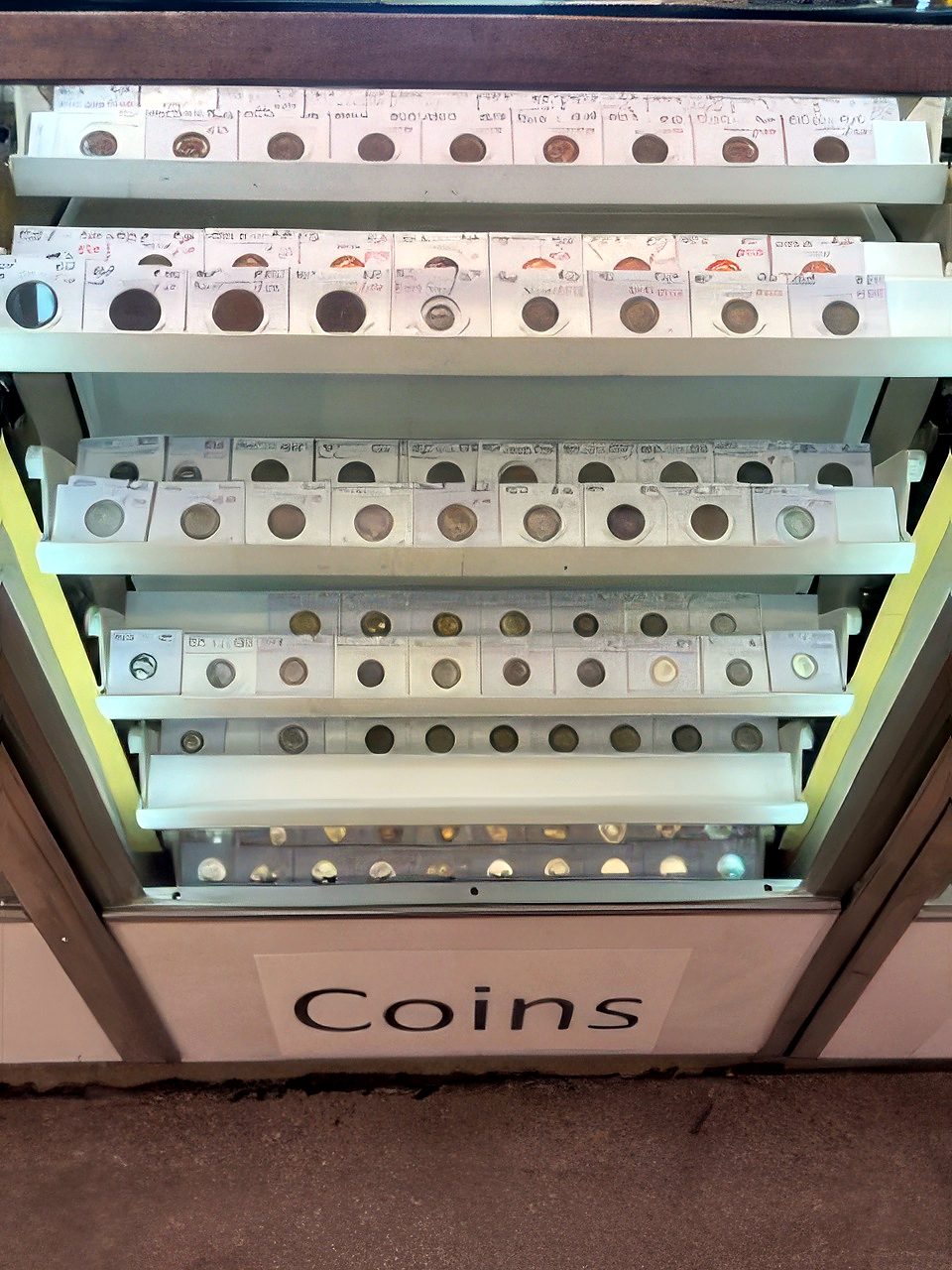
Currency is one of the six categories in our booths. On our last look, the coins were lined up in labeled holders in a lit case marked "Coins." It's a good place to practice reading dates and mint marks through the holder window with your loupe.
- Use the Treasure Map. It marks the numbered booths and the display cases on the main floor.
- Go upstairs too. The mall covers over 21,000 square feet on two floors.
- Come back. Booths change as vendors sell and restock, so we can't promise any particular coin is in stock. That's the hunt.
- Questions about something in a case? Ask at the cashier at the entrance, or call (775) 461-3142.
Carson City "CC" coins, and the old Mint down the street
The Carson City Mint was built to turn Comstock Lode silver into coins, and everything it struck from 1870 to 1893 carries a small "CC." It made silver dimes, twenty-cent pieces, quarters, half dollars and dollars, plus $5, $10 and $20 gold pieces. On a Morgan silver dollar, look on the back, just above the D and O in DOLLAR. Only a small slice of all Morgans came from Carson City, so collectors pay a premium. Call it your someday coin.
The building is now the Nevada State Museum, at 600 N Carson St, 0.7 miles south of us, about a 15-minute walk. Its Historic Carson City Mint gallery lists the mint's original Coin Press No. 1, which still strikes medallions on set days, and a complete set of Carson City Morgan dollars. Check their hours before you go. Want to make a whole day of it? Here's our antiques-and-history day on North Carson Street.
More from the booths
-
China · How to value
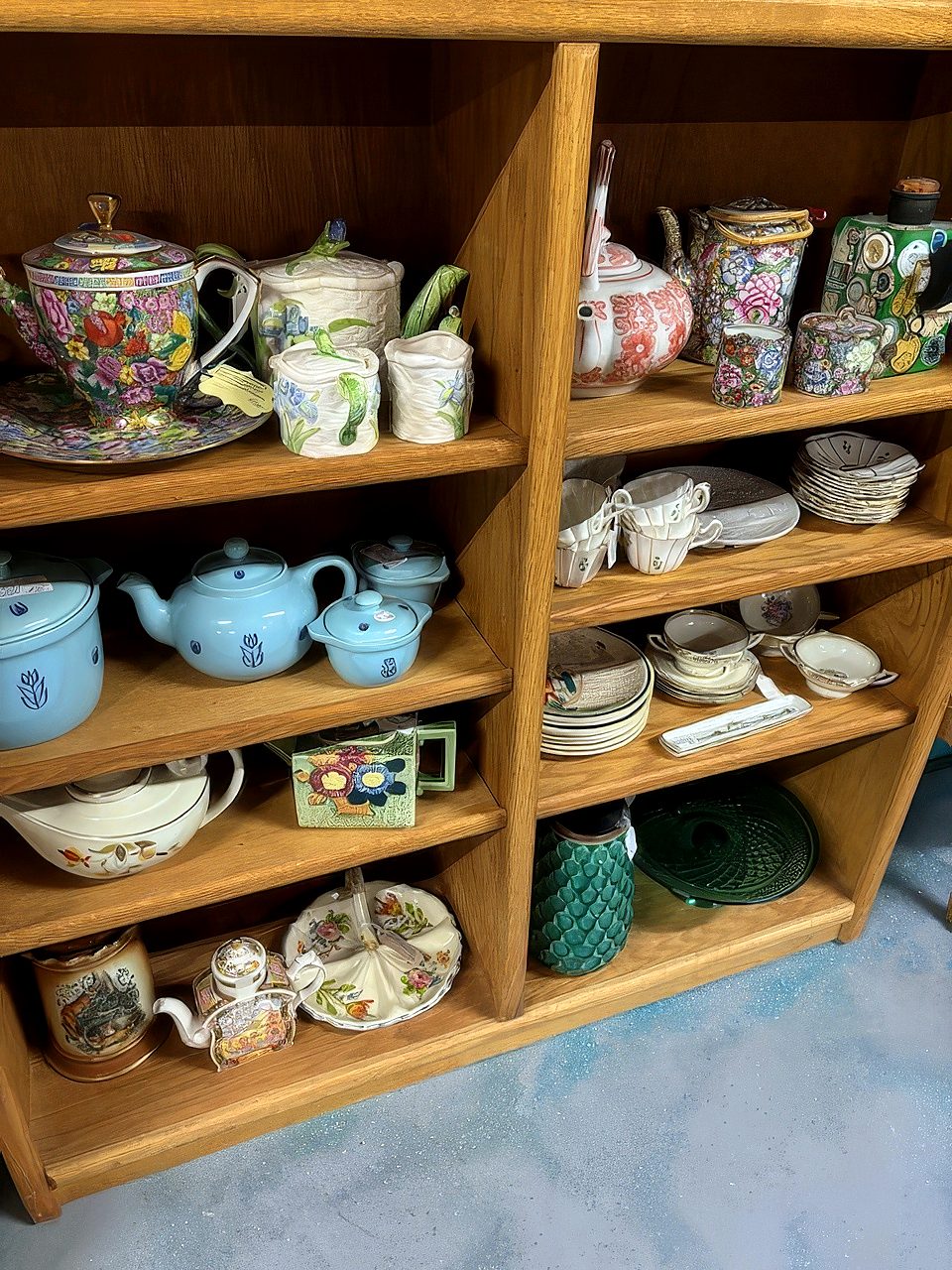
Is my china worth anything?
Read the backstamp, check the rim and find real sold prices before you guess.
-
Collectibles · Real or repro
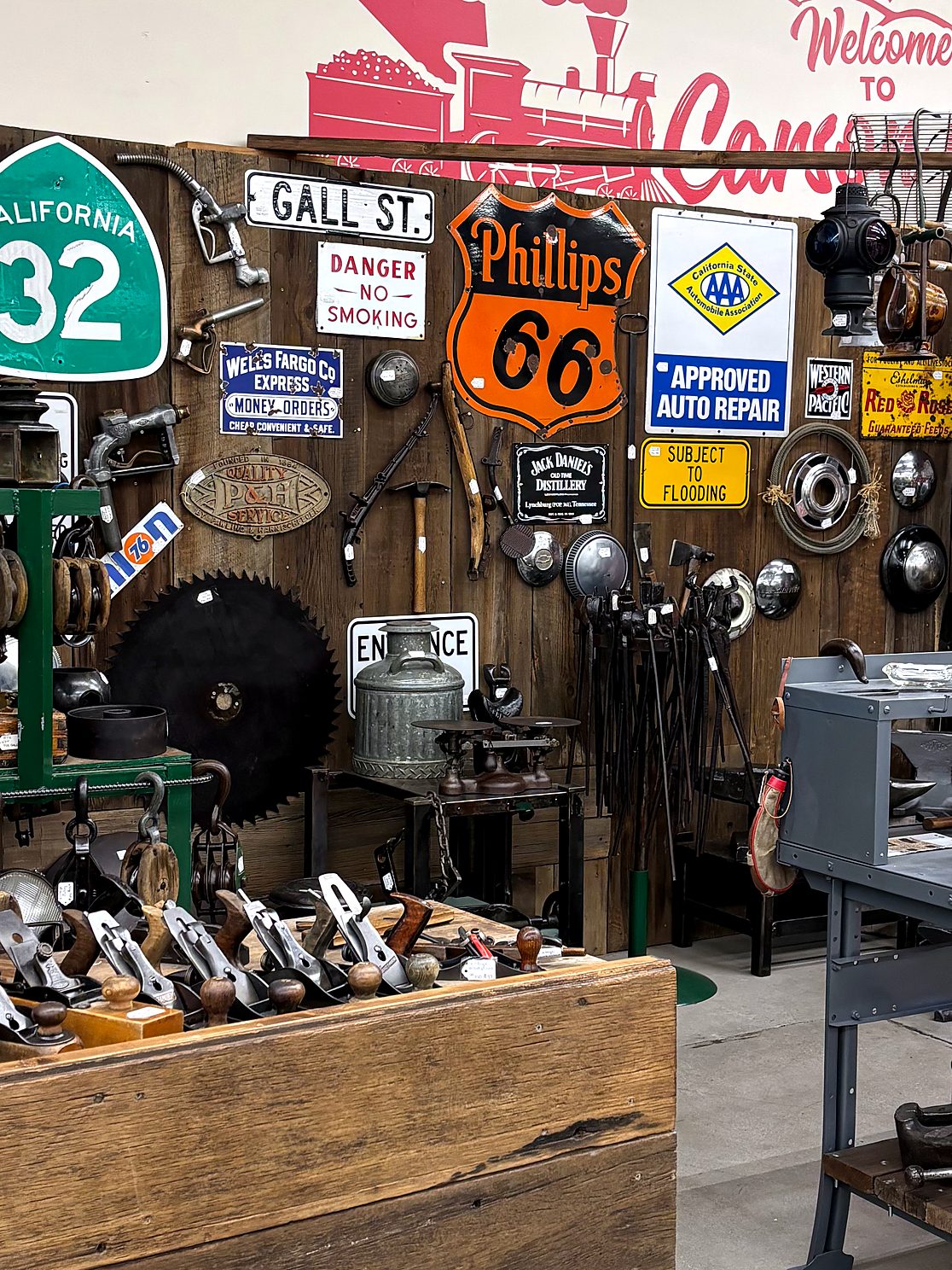
Spot a real vintage sign
Chips, rust, grommets and fake aging: a 5-minute check you can run in the booth.
Coin collecting: quick answers
- What's the best coin to start collecting?
- The ones in your pocket. Circulating penny production ended on November 12, 2025, and new 250th-anniversary coins are in 2026 change, so a date-and-mint-mark set costs you face value and some time.
- Should I clean an old coin?
- No. Rubbing can scratch the surface, and PCGS and NGC give coins with cleaning damage a "Details" grade instead of a straight number grade.
- What years are U.S. coins silver?
- Dimes, quarters and half dollars dated 1900 through 1964 are 90% silver, and Kennedy halves dated 1965–1970 are 40%. Nickels from 1942–1945 with a large P, D or S above Monticello are 35% silver.
- Does Carson Antiques & Collectibles Mall have coins?
- Currency is one of the mall's six categories. On our last look, coins were in labeled holders in a lit case marked "Coins"; booths change, so check the Treasure Map and both floors.